
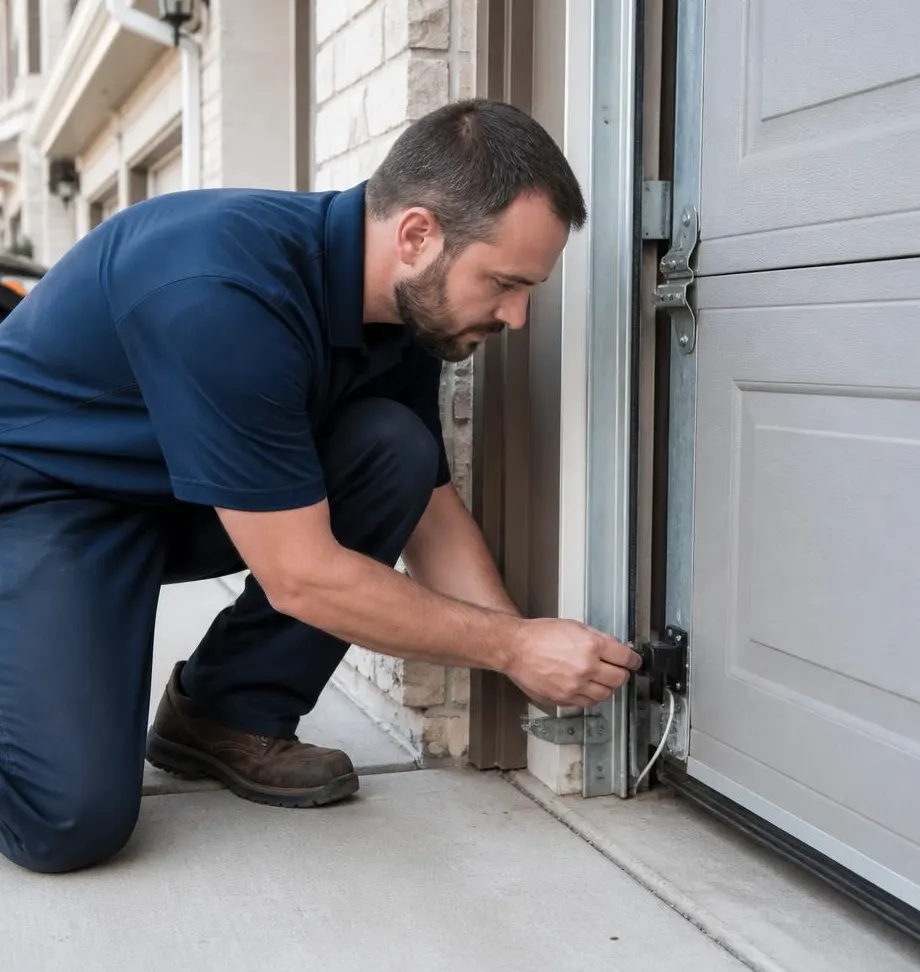
The short answer: use a silicone-based or lithium-based garage door lubricant on the hinges, rollers, springs, and the track's roller bearings twice a year (more often if you're near the water), and skip WD-40, motor oil, and grease. The products that work are the ones that stay slick without collecting dust, salt residue, and the grit that blows around during Florida's afternoon downpours and hurricane-season winds.
Why Lubrication Matters More Here Than in Drier Climates
Saint Petersburg's combination of high humidity, salt air near the coast, and heavy seasonal rain is tough on moving metal parts. Hinges and rollers swell slightly with moisture, springs lose their coating faster near the water, and any grease that collects dust turns into a gritty paste that grinds down metal instead of protecting it. A door that squeals, jerks, or feels heavier than usual when opening is often telling you it's dry, not necessarily broken.
Tools and Supplies You'll Need
- Silicone-based or lithium-based garage door lubricant (spray can with a straw nozzle)
- A clean rag or microfiber cloth
- A soft brush (an old toothbrush works) for clearing debris out of tracks
- Step ladder
- Work gloves
- Safety glasses
Step-by-Step: How to Lubricate Your Garage Door
- Close the door and disconnect the opener. Pull the red release cord so the door won't move unexpectedly while you're working on it.
- Wipe down the tracks first. Use a dry rag to remove dust, pollen, and salt film from both vertical tracks. Never lubricate the tracks themselves — lubricant there just attracts grime and makes rollers slip.
- Spray the hinges. Apply lubricant to each hinge where the panels meet, working the door open and closed a few inches at a time so it reaches the pivot points.
- Lubricate the rollers. Spray the bearings at the center of each roller, not the roller wheel itself. If your rollers are nylon, a light coat is enough; steel rollers can take a bit more.
- Coat the springs. Run a light, even line of lubricant down the length of both torsion springs. This is the step people skip most often, and it's the one that matters most in salt air, since bare spring coils rust and lose tension faster.
- Treat the top bracket, bearing plates, and the opener's chain or screw rail. A quick spray here cuts down on the grinding noise many Florida homeowners mistake for a failing opener.
- Open and close the door 2–3 times by hand to work the lubricant into every moving joint before reconnecting the opener.
- Wipe off excess. Any lubricant left sitting on the surface just becomes a dust magnet during the next humid stretch.
Products to Use
- Silicone-based garage door lubricant — holds up well in humidity and doesn't gum up
- Lithium-based grease sprays made specifically for garage doors — good for springs and hinges that take heavy load
Products to Avoid
- WD-40 — it's a solvent and moisture displacer, not a long-term lubricant; it evaporates quickly and leaves parts dry again within days
- Motor oil or household 3-in-1 oil — too thin, drips, and attracts dirt
- White lithium grease in tub form — too thick for rollers and hinges, and it cakes up with coastal dust and pollen
What a Homeowner Can Do vs. What Needs a Technician
Lubricating hinges, rollers, and tracks is a safe DIY task for most homeowners. What should not be a DIY job is anything involving the torsion springs beyond a light surface coating. If a spring looks rusted, stretched, or has a visible gap in the coil, that's a sign of wear that lubricant won't fix, and springs are under enough tension to cause serious injury if handled wrong. Same goes for any lubrication that reveals a bent track, a stripped gear in the opener, or cables that look frayed — those point to a repair issue, not a maintenance one.
When to Call Saint Petersburg Garage Door
If you've lubricated everything and the door still grinds, sticks, or sags on one side, it's worth having a technician take a look before it turns into a bigger repair. Our Garage Door Maintenance & Tune-Up service includes a full inspection of springs, cables, and hardware for rust or wind-load stress — common after a season of coastal humidity and storms. If we find a spring that's past the point of simple lubrication, our Garage Door Cable & Roller Repair service can replace worn parts before they fail on you mid-cycle.
If your garage door in Saint Petersburg, FL needs more than a fresh coat of lubricant, give Saint Petersburg Garage Door a call — we'll get it running quietly and safely again, the right way.